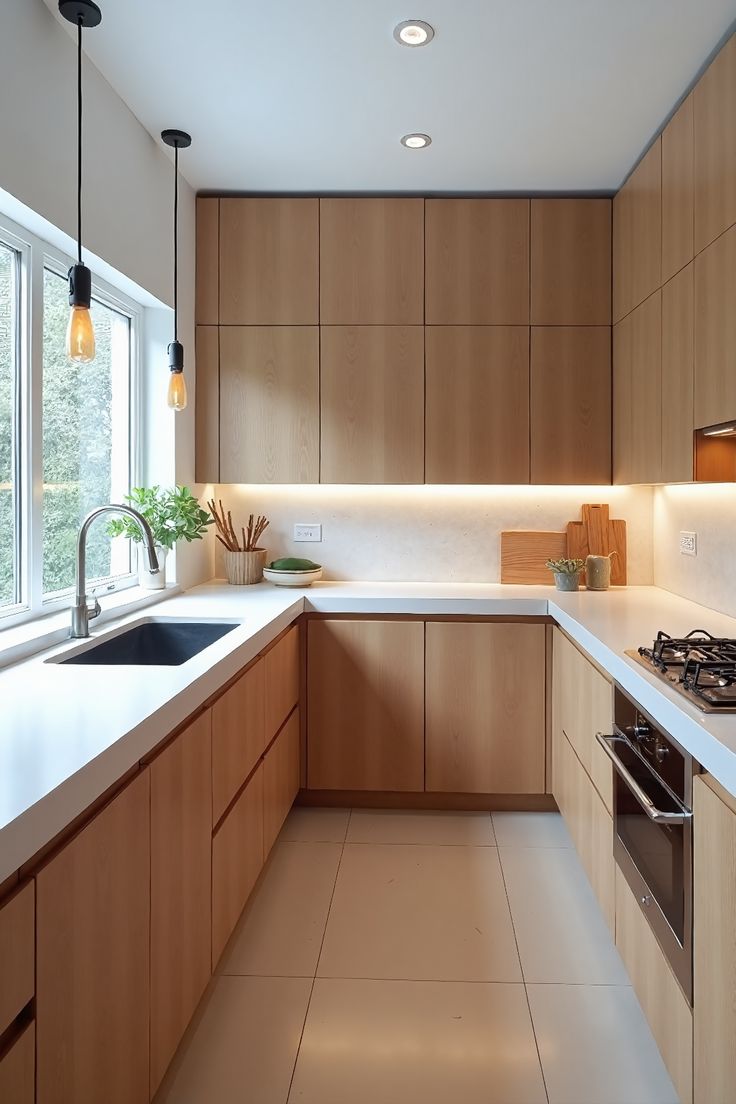
A kitchen is often called the heart of the home, but what happens when that heart is only a few square meters? Designing a compact kitchen requires a blend of creativity, ergonomics, and strategic planning. You don’t need a massive footprint to create a gourmet workspace; you just need to make every inch count.
In this guide, we explore the most effective strategies for kitchen design for small spaces, ensuring your home remains stylish, functional, and clutter-free.
Understanding the Principles of Compact Design
When space is a premium, the primary goal is to reduce friction in your daily routine. Effective kitchen design for small spaces focuses on the “Work Triangle” concept the distance between your stove, sink, and refrigerator. In a small area, this triangle is naturally tighter, which can actually make cooking more efficient if planned correctly.
The secondary focus should be on “Visual Lightness.” By using specific materials and colors, you can trick the eye into perceiving the room as larger and more open than it actually is.
Top Layout Strategies for Small Kitchens
The High-Efficiency Galley Layout
The galley layout consists of two parallel counters. It is widely considered the most efficient for cooking because it minimizes the steps between workstations. To keep it from feeling like a hallway, try using open shelving on one side to break up the heavy look of upper cabinets.
The Seamless One Wall Design
Common in studio apartments, this layout places all appliances and cabinets on a single wall. The key here is to use integrated appliances that match the cabinetry, creating a continuous line that doesn’t “stop” the eye.
The Strategic L-Shape
This layout uses two perpendicular walls. It is excellent for creating an open feel and often allows enough room for a small bistro table or a rolling kitchen cart in the opposite corner.
Innovative Storage Solutions to Maximize Space
The biggest enemy of a small kitchen is clutter. To maintain a clean look, you must find a “home” for every utensil and spice jar.
Vertical Storage and Ceiling Racks
When you run out of floor space, look up. Extending your cabinets all the way to the ceiling provides extra storage for items you only use occasionally, such as holiday platters or large stockpots. Additionally, hanging pot racks can turn your cookware into a design feature while freeing up deep cabinet space.
Secret Drawers and Pull-Out Pantries
Modern cabinetry offers “toe-kick” drawers that sit at the very base of your units, perfect for flat baking sheets. Slim, pull-out spice racks can also be installed in gaps as narrow as 10 centimeters, turning wasted gaps into functional storage.
Multipurpose Furniture
Invest in a kitchen island on wheels. It serves as a prep station when you are cooking and can be pushed against a wall or into a closet when you need more floor space for guests.
Lighting and Color: Creating the Illusion of Space
The right aesthetic choices can physically brighten a room.
- Monochromatic Palettes: Using shades of white, cream, or light grey makes the boundaries of the room disappear.
- Reflective Backsplashes: A mirrored or high-gloss subway tile backsplash reflects light, doubling the perceived depth of the counters.
- Under-Cabinet Lighting: Dark corners make a kitchen feel smaller. Adding LED strip lights under upper cabinets eliminates shadows and makes the workspace feel expansive.
Frequently Asked Questions
What is the best color for a small kitchen? Light colors are generally best. White, light oak, and soft pastels reflect the most light. However, you can use dark colors on lower cabinets as long as the upper half of the kitchen remains bright.
How can I get more counter space in a tiny kitchen? Consider over-the-sink cutting boards or stove covers that provide extra flat surfaces when the burners aren’t in use. A rolling butcher block is also a great temporary prep station.
Should I choose drawers or cupboards for lower storage? Drawers are almost always better for small spaces. They allow you to pull the contents toward you, so you don’t have to get on your hands and knees to find items lost in the back of a deep cupboard.
Is an island possible in a small kitchen design? A permanent, large island might block traffic, but a “peninsula” (an island attached to a wall or counter) or a small mobile cart provides the same benefits without the cramped feel.