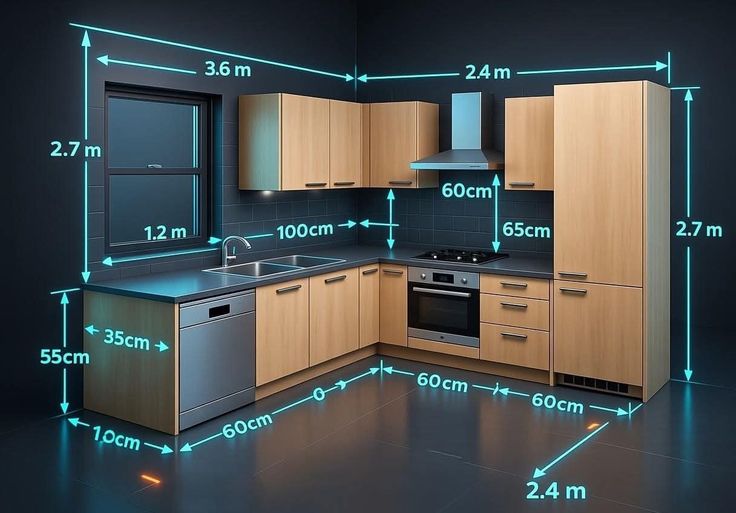
Have you ever felt like you were running a marathon just to prepare a simple Sunday roast? Or perhaps you find yourself constantly bumping into family members while trying to reach the fridge? These are classic signs of a poor kitchen layout.
In the world of interior design, a beautiful kitchen is only half the battle. The true mark of a great kitchen is how it “flows.” By applying professional kitchen workflow design principles, you can reduce physical strain, minimize cooking time, and turn your kitchen into a highly efficient workspace.
The Foundation: The Classic Work Triangle
Any discussion about kitchen workflow must start with the Work Triangle. Developed in the 1940s, this principle remains the cornerstone of kitchen ergonomics. The triangle connects the three most important work centers:
- The Sink (Cleaning)
- The Refrigerator (Storage)
- The Stove/Oven (Cooking)
According to this principle, the sum of the three sides of the triangle should be between 12 and 26 feet. If the distance is too small, the kitchen feels cramped; too large, and meal prep becomes exhausting. Most importantly, no major traffic path should cross through this triangle.
Evolution of the Modern Kitchen: The Zone Method
While the triangle is great for a single cook, modern families often have multiple people in the kitchen at once. This has led to the Zone Method, which organizes the kitchen based on specific tasks.
The Consumables Zone
This area houses your refrigerator and pantry. It should be located near the entry point of the kitchen to make unloading groceries quick and easy.
The Non-Consumables Zone
This is where you store your daily-use items like plates, bowls, glasses, and cutlery. Ideally, this zone should be close to the dishwasher for easy unloading.
The Cleaning Zone
Centered around the sink and dishwasher. This area requires enough counter space to stack dirty dishes on one side and clean, drying dishes on the other.
The Preparation Zone
This is your primary workspace. It should have a large, uninterrupted stretch of countertop (at least 36 inches) and be positioned between the sink and the stove.
The Cooking Zone
This contains the range, oven, and microwave. It’s essential to have heat-resistant surfaces nearby to set down hot pots and pans immediately.
Ergonomics and Vertical Workflow
Efficiency isn’t just about the horizontal distance between appliances; it’s also about how much you have to bend, reach, and stretch.
- The Landing Area: Every major appliance needs a “landing area”—a clear patch of counter right next to it. For example, you need a spot next to the fridge to set down groceries, and a spot next to the oven to place hot trays.
- Drawers Over Cupboards: Modern workflow principles favor deep drawers for base cabinets. Pulling out a drawer to see everything from above is significantly faster and easier on the back than kneeling to peer into a dark cabinet.
- The Golden Path: Keep your most-used tools (salt, pepper, oils, and favorite knives) within the “reach zone”—the area between your hips and your shoulders.
Minimizing Footsteps and “Cross-Traffic”
A common mistake in kitchen design is placing the trash can or the spice rack in a spot that requires the cook to walk across the room repeatedly.
To optimize your workflow, store items exactly where they are first used. Store pots and pans by the stove, knives and cutting boards in the prep zone, and glassware near the refrigerator or water dispenser. This “point-of-use” storage eliminates unnecessary movement and keeps the kitchen organized during high-pressure cooking moments.
Integration of Technology and Smart Flow
In 2026, workflow isn’t just physical; it’s digital. A modern kitchen workflow includes designated spots for tablets or smart screens to display recipes at eye level, ensuring the cook doesn’t have to hunch over a phone. Furthermore, integrating smart appliances—like an oven that preheats via voice command—allows the cook to stay in the “Preparation Zone” longer without having to move back and forth to adjust settings.
Frequently Asked Questions
What is the best layout for a two-cook kitchen? For households with two cooks, a “Double Triangle” or a large island layout is best. This allows each person to have their own prep and cleaning zone without overlapping paths.
How much counter space do I actually need? The National Kitchen & Bath Association (NKBA) recommends a total of at least 158 inches of usable counter frontage. This includes the space needed for prep, landing areas, and small appliances.
Where should I place my dishwasher for the best workflow? The dishwasher should always be placed immediately to the left or right of the sink. This allows you to scrape, rinse, and load in one continuous motion.
How do I improve workflow in a small galley kitchen? In small spaces, focus on vertical storage and pull-out surfaces. Using a sink cover to create extra prep space when the sink isn’t in use can also significantly improve the flow.
What is the “landing area” rule? You should aim for at least 15 inches of counter space on the handle side of the refrigerator and at least 12 to 15 inches on both sides of the stove and sink.