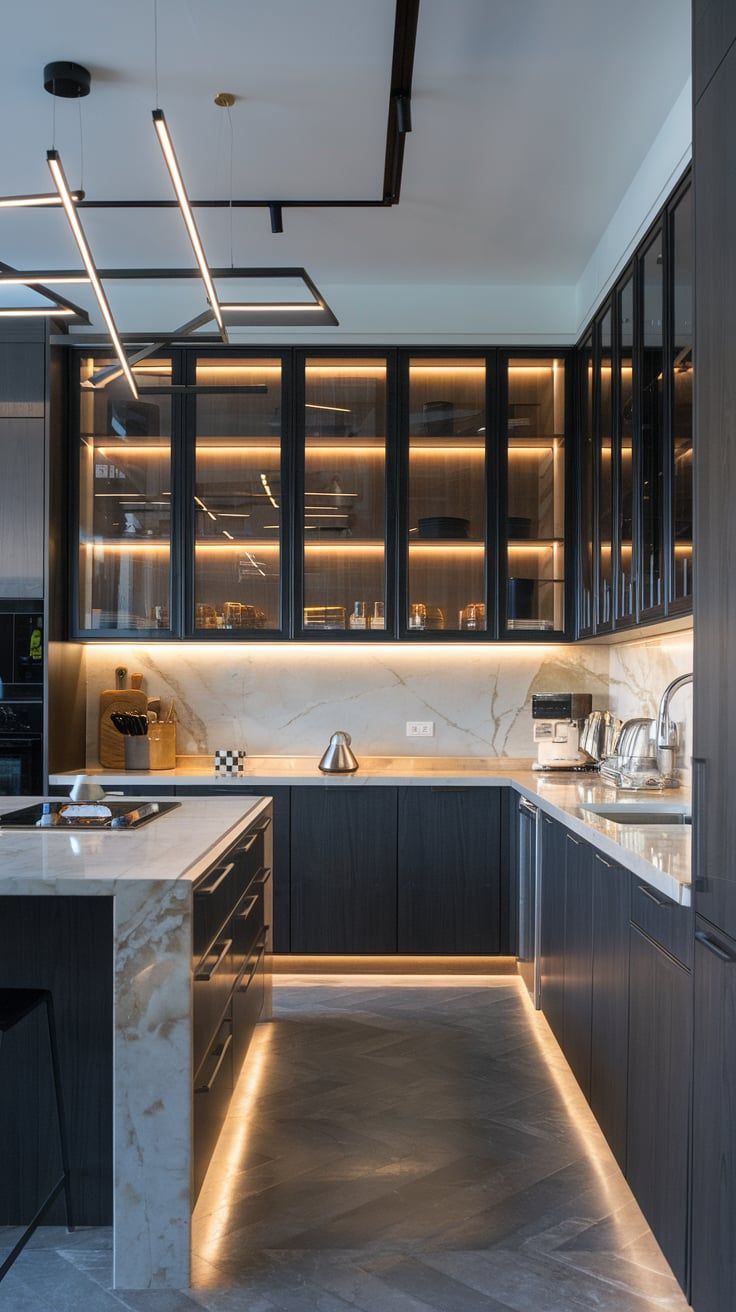
Lighting is often the most overlooked element in kitchen design, yet it has the greatest impact on how the space functions and feels. A poorly lit kitchen can make cooking dangerous and the atmosphere feel cold, while a well-planned scheme transforms the room into a warm, inviting hub.
In 2026, kitchen lighting is no longer just about a single bright bulb in the center of the ceiling. It’s about “layering” light to serve different purposes. These kitchen lighting placement tips will help you master the balance between safety, utility, and style.
The Rule of Three: Layering Your Light
To achieve a professional look, you must incorporate three distinct layers of lighting. Each serves a specific purpose and should ideally be controlled by separate switches.
Ambient Lighting: The Foundation
Ambient lighting provides the general illumination for the room. This is your “base” layer that allows you to navigate the space safely.
- Placement Tip: Recessed “can” lights are the most common choice. Space them roughly 4 to 6 feet apart and about 12 to 18 inches away from the cabinets to avoid creating harsh shadows on your workspace.
Task Lighting: Precision for Prep
Task lighting is the most critical layer for safety. It illuminates the specific areas where you chop, cook, and read recipes.
- Placement Tip: The best place for task lighting is directly under the upper cabinets. LED strip lights should be placed toward the front edge of the cabinet underside (not the back) to cast light evenly across the entire countertop.
Accent Lighting: Adding Character
Accent lighting is the “jewelry” of the kitchen. It highlights architectural features and adds depth to the room.
- Placement Tip: Use directional spotlights to highlight a beautiful backsplash or place “toe-kick” lighting at the base of your island to create a floating effect that doubles as a perfect nightlight.
Perfecting Pendant Placement Over the Island
Pendant lights are usually the focal point of a kitchen, but their placement is where most homeowners make mistakes.
- The Height Rule: Pendants should generally hang 30 to 36 inches above the countertop. This height ensures the light doesn’t block your view of guests while providing enough illumination.
- The Spacing Rule: If you are hanging multiple pendants, space them about 30 inches apart. Always ensure the outermost pendants are at least 6 inches away from the edge of the island to prevent accidental bumps.
- The Rule of Three: For visual balance, an odd number of pendants (usually three) tends to look more pleasing than an even number, unless the island is exceptionally small.
Illuminating the “Dead Zones”
Some areas of the kitchen are notorious for being dark and difficult to use. Smart placement can solve these issues.
Inside the Cabinets
Deep pantry cabinets or glass-front display units benefit immensely from interior lighting. Use “puck” lights or vertical LED strips inside the cabinet frame. This not only helps you find that hidden jar of spices but also adds a luxurious glow to your glassware.
Above the Sink
The sink is a high-task area. Even if you have a window, you need a dedicated light source for evening clean-up. A single recessed light or a small, stylish pendant centered over the sink is a must-have.
The Over-the-Range Area
While most range hoods come with built-in lights, ensure they are powerful enough to illuminate your entire cooktop. If you don’t have a hood, a heat-resistant recessed light positioned directly above the stove is essential.
Choosing the Right Color Temperature
Placement is only half the battle; the color of the light matters just as much.
- Warm White (2700K – 3000K): Best for dining areas and accent lighting to create a cozy, welcoming vibe.
- Neutral/Cool White (3500K – 4000K): Best for task lighting and prep areas. It mimics daylight, making it easier to see the true color of food and read fine print on labels.
Avoid “Daylight” bulbs (5000K+) in a residential kitchen, as they can make the space feel clinical and blue, which isn’t appetizing for a home environment.
Frequently Asked Questions
How many recessed lights do I need in my kitchen?
A general rule of thumb is to take the square footage of your kitchen and multiply it by 1.5 to get the total wattage needed. Then, divide that by the wattage of the bulbs you intend to use to find the number of fixtures.
Should I put my kitchen lights on a dimmer?
Yes, absolutely. Dimmers are the easiest way to transition your kitchen from a bright “work mode” for cooking to a soft “dinner mode” for entertaining.
Can I mix different metal finishes for my light fixtures?
Yes. Mixing metals is a popular trend. For example, you can have black recessed trims and brass pendant lights. Just try to keep one finish dominant to maintain a cohesive look.
What is the best lighting for a small kitchen?
In a small kitchen, focus on “invisible” lighting. Under-cabinet LEDs and recessed ceiling lights keep the space feeling open and airy without the visual clutter of hanging fixtures.
How do I avoid shadows on my countertop?
Shadows usually happen when the light source is behind you. To avoid this, ensure your ceiling lights are aligned with the edge of the countertop rather than the center of the walkway, and always supplement with under-cabinet task lighting.