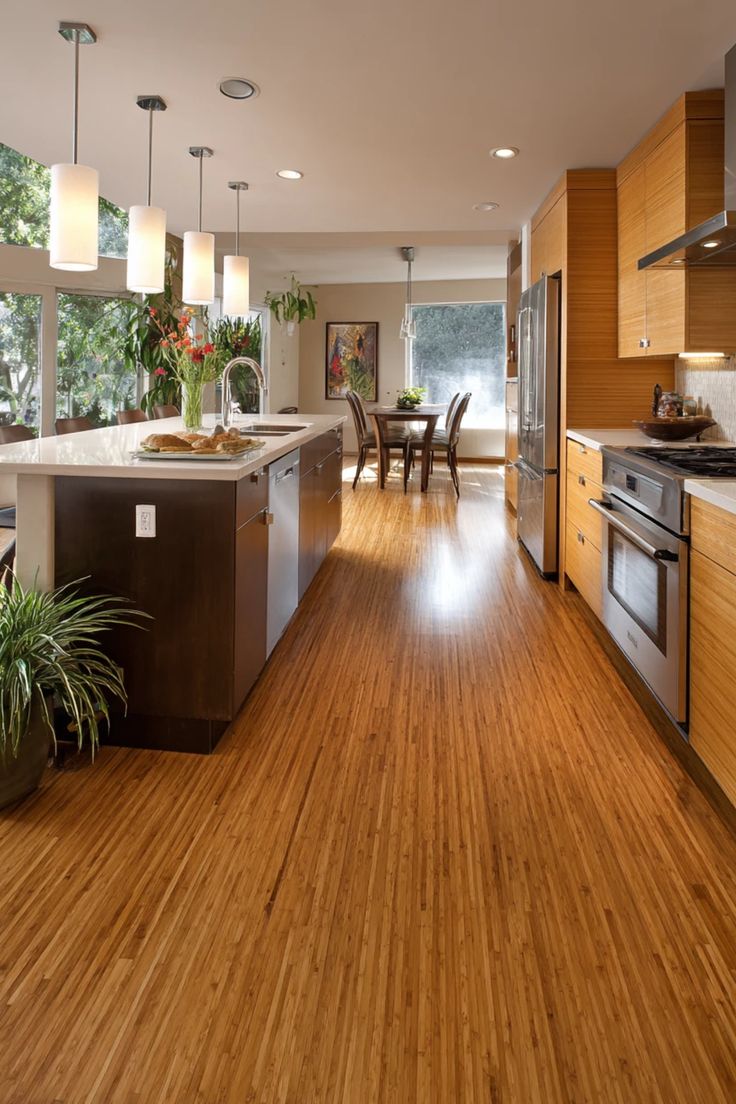
The kitchen floor is the hardest-working surface in your home. It must withstand heavy foot traffic, resist frequent spills, endure dropped cast-iron pans, and still look beautiful as the backdrop to your home’s social hub. Choosing the right material requires a delicate balance between aesthetics, comfort, and long-term durability.
From classic hardwoods to cutting-edge synthetics, this guide explores the best kitchen flooring material options available in 2026 to help you make an investment that lasts for decades.
Porcelain and Ceramic Tile: The Waterproof Standard
Tile has remained a top choice for kitchens for generations due to its unmatched durability and water resistance.
- Porcelain Tile: This is the “heavy-duty” version of ceramic. Fired at higher temperatures, it is denser and less porous, making it nearly impervious to moisture. Modern printing technology allows porcelain to mimic the look of natural stone, wood, and even concrete.
- Ceramic Tile: Generally more affordable than porcelain and easier to cut. While still very durable, it is slightly more porous and best suited for indoor environments with standard foot traffic.
Pro Tip: Use a large-format tile with thin, dark grout lines. This minimizes the amount of scrubbing required and makes a small kitchen feel significantly larger.
Luxury Vinyl Plank (LVP): The Modern Favorite
In recent years, Luxury Vinyl Plank (LVP) has surged in popularity, becoming a primary rival to hardwood and tile.
- Waterproof Performance: Most high-quality LVP is 100% waterproof, making it ideal for kitchens where “accidents” like a leaking dishwasher or a spilled gallon of milk are common.
- Ease of Installation: Many LVP products feature a “click-lock” system, allowing for a floating floor installation that can often go directly over existing flooring.
- Comfort Underfoot: Unlike tile or stone, vinyl has a slight “give,” which makes it much more comfortable to stand on while prepping long meals.
Natural Hardwood: Timeless Elegance
Nothing quite matches the warmth and character of real wood. While some homeowners worry about water, hardwood remains a viable and high-value option for the kitchen.
Engineered Hardwood vs. Solid Wood
In a kitchen environment, Engineered Hardwood is often preferred. It consists of a real wood veneer atop layers of high-quality plywood. This construction makes it much more stable and less likely to warp or gap when exposed to the humidity and temperature changes of a kitchen.
Maintenance Considerations
To keep wood floors looking their best in a kitchen, they must be finished with a high-quality, moisture-resistant sealant. While they can be scratched, they also offer the unique ability to be sanded and refinished, essentially “resetting” the floor’s lifespan.
Natural Stone: The Luxury Statement
If you are looking to add significant resale value and a sense of luxury, natural stone is the way to go.
- Granite and Slate: These are the most durable stone options. Slate is naturally slip-resistant due to its textured surface, while granite is incredibly difficult to scratch.
- Travertine and Marble: These offer a softer, more classic look but are more porous. They require regular sealing (typically once a year) to prevent staining from acidic spills like wine or tomato sauce.
Sustainable Choices: Cork and Bamboo
For the eco-conscious homeowner, there are several “green” kitchen flooring material options that don’t sacrifice style.
- Cork: Cork is harvested from the bark of trees without harming them. It is naturally antimicrobial, warm to the touch, and incredibly “springy,” making it the most ergonomic choice for those with back or joint pain. It does, however, require a tough topcoat to protect against moisture.
- Bamboo: Technically a grass, bamboo grows incredibly fast. High-quality “strand-woven” bamboo is actually harder and more durable than many traditional hardwoods.
Comparing Durability and Cost
| Material | Water Resistance | Durability | Comfort | Relative Cost |
| Porcelain Tile | Excellent | High | Low | Moderate |
| Luxury Vinyl (LVP) | Excellent | High | Moderate | Low – Moderate |
| Engineered Wood | Moderate | Moderate | Moderate | High |
| Natural Stone | High (if sealed) | High | Low | Very High |
| Cork | Low – Moderate | Moderate | Very High | Moderate |
Frequently Asked Questions
What is the best kitchen flooring for a home with pets?
Luxury Vinyl Plank (LVP) or Porcelain tile are the best choices. They are highly resistant to scratches from claws and won’t be damaged by pet accidents or water bowl splashes.
Can I install hardwood in a kitchen?
Yes, but it requires care. You should wipe up spills immediately and place mats in high-moisture areas, such as in front of the sink and dishwasher. Engineered hardwood is generally better than solid wood for kitchen use.
Which flooring is easiest to clean?
Glazed porcelain tile and LVP are the easiest to maintain. They can be swept and damp-moped with standard cleaners without the need for special oils or waxes.
How do I prevent my tile floor from feeling cold?
If you are installing new tile, consider adding an electric radiant floor heating system underneath. Alternatively, using area rugs or “anti-fatigue” mats in prep zones can provide warmth and comfort.
What is the most budget-friendly kitchen flooring?
Sheet vinyl and laminate are typically the most affordable. However, LVP offers much better durability and water resistance for just a slightly higher price point, often making it a better long-term value.