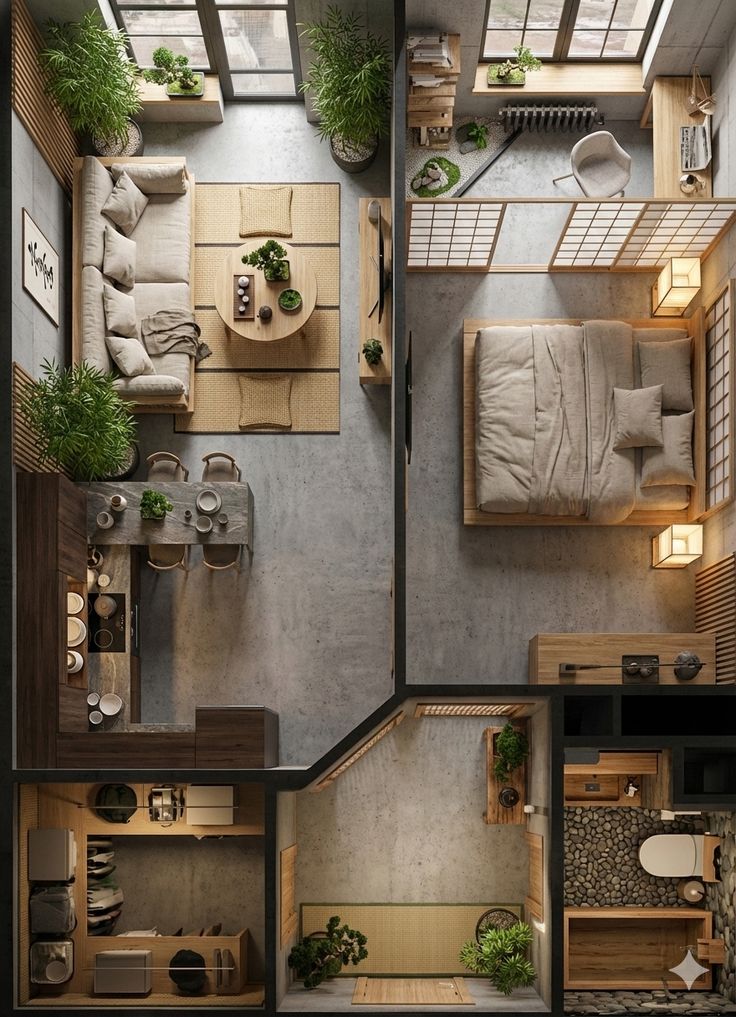
Designing a kitchen is much more than picking out beautiful tiles and high-end appliances. It is an exercise in spatial logic. The way your kitchen is laid out determines whether cooking feels like a graceful dance or a frustrating obstacle course. A well-planned kitchen improves efficiency, increases your home’s value, and makes the heart of your home a joy to inhabit.
If you are starting a renovation or building from scratch, these kitchen layout planning tips will guide you through the technical and creative decisions needed to create a perfect culinary workspace.
Understand and Apply the Work Triangle
The “Work Triangle” is a classic architectural principle that remains the gold standard for kitchen efficiency. It connects the three most-used areas: the sink, the refrigerator, and the stovetop.
For a layout to be effective, the distance between these three points should be balanced. If they are too close, the kitchen feels cramped; if they are too far apart, you’ll waste energy walking back and forth. Ideally, each leg of the triangle should be between 4 and 9 feet, and the path should stay clear of trash cans or kitchen islands.
Choose the Layout That Fits Your Architecture
Your floor plan is dictated by the available square footage. Here are the most effective layouts and who they are best for:
The L-Shaped Layout
This is the most versatile option. It uses two perpendicular walls, creating a natural work triangle and leaving plenty of room for a dining table or an island. It is excellent for open-concept homes.
The U-Shaped Layout
Ideal for serious home cooks, the U-shape surrounds the chef on three sides with countertops and storage. This layout provides maximum workspace but can feel enclosed if the room is narrow.
The Galley Layout
Common in smaller homes and professional restaurants, this “hallway” style features two parallel walls. It is incredibly efficient because everything is within a few steps, but it can create traffic jams if multiple people are in the kitchen at once.
The One-Wall Layout
Perfect for studio apartments or secondary suites, this layout places all appliances and cabinets on a single wall. To make this work, vertical storage is key to making up for the lack of horizontal space.
Prioritize Countertop “Landing Zones”
One of the most overlooked kitchen layout planning tips is the inclusion of “landing zones.” These are clear stretches of countertop located immediately next to major appliances.
- Next to the Fridge: You need a spot to set down heavy grocery bags.
- Beside the Oven: You need a heat-resistant surface to place hot trays the moment they come out of the heat.
- Around the Sink: You need space for both dirty dishes waiting to be washed and clean dishes waiting to dry.
Aim for at least 15 to 18 inches of clear counter space on both sides of your sink and stove for maximum safety and comfort.
Manage Traffic Flow and Clearance
A kitchen is rarely a one-person zone. Planning for “traffic” ensures that people can grab a snack from the fridge without bumping into the person boiling a pot of pasta.
Keep the primary walkway at least 36 inches wide. If your kitchen frequently has two cooks, try to increase that to 48 inches. Ensure that appliance doors—like the dishwasher and oven—can open fully without hitting a kitchen island or a wall. If your layout includes a seating area at an island, allow at least 44 inches behind the stools so people can still walk past comfortably.
Incorporate Smart Storage and Verticality
Storage should be planned based on “point-of-use.” This means storing pots and pans right next to the stove, and glassware near the refrigerator or dishwasher.
To maximize a small layout, go vertical. Run your cabinets all the way to the ceiling to store seasonal items like holiday platters or large stockpots. Use deep drawers for base cabinets instead of traditional doors; drawers allow you to see and reach items at the very back without kneeling on the floor.
Plan for Lighting and Ventilation Early
Don’t let lighting be an afterthought. A great layout includes three layers:
- Ambient Lighting: General ceiling lights to see the whole room.
- Task Lighting: Under-cabinet LEDs that illuminate your prep surfaces.
- Accent Lighting: Decorative pendants over an island that add personality.
Equally important is ventilation. Ensure your layout allows for a range hood that vents to the outside. A powerful vent is essential for removing grease, steam, and odors, especially in open-concept layouts.
Frequently Asked Questions
What is the best kitchen layout for a small space? The Galley or One-Wall layouts are typically the most space-efficient for small footprints. Using light colors and open shelving can help these layouts feel less restrictive.
How much space should be between a kitchen island and the cabinets? The “gold standard” is 42 inches. This provides enough room for someone to pass by while a cabinet or oven door is open.
Where is the best place to put a microwave in a new layout? To save counter space, consider a microwave drawer in the island or an eye-level built-in nook. Avoid placing it above the range if possible, as reaching over a hot stove is a safety risk.
Should the sink or the stove be on the kitchen island? Both have pros and cons. A sink on the island allows you to face your guests while cleaning, but can lead to a pile of dirty dishes in the center of the room. A stove on the island is great for “social cooking” but requires a more expensive island-mount range hood.
How do I decide where to put the trash can? The most efficient spot for a trash and recycling pull-out is right next to the sink or in the “Preparation Zone,” as this is where most food waste is generated.