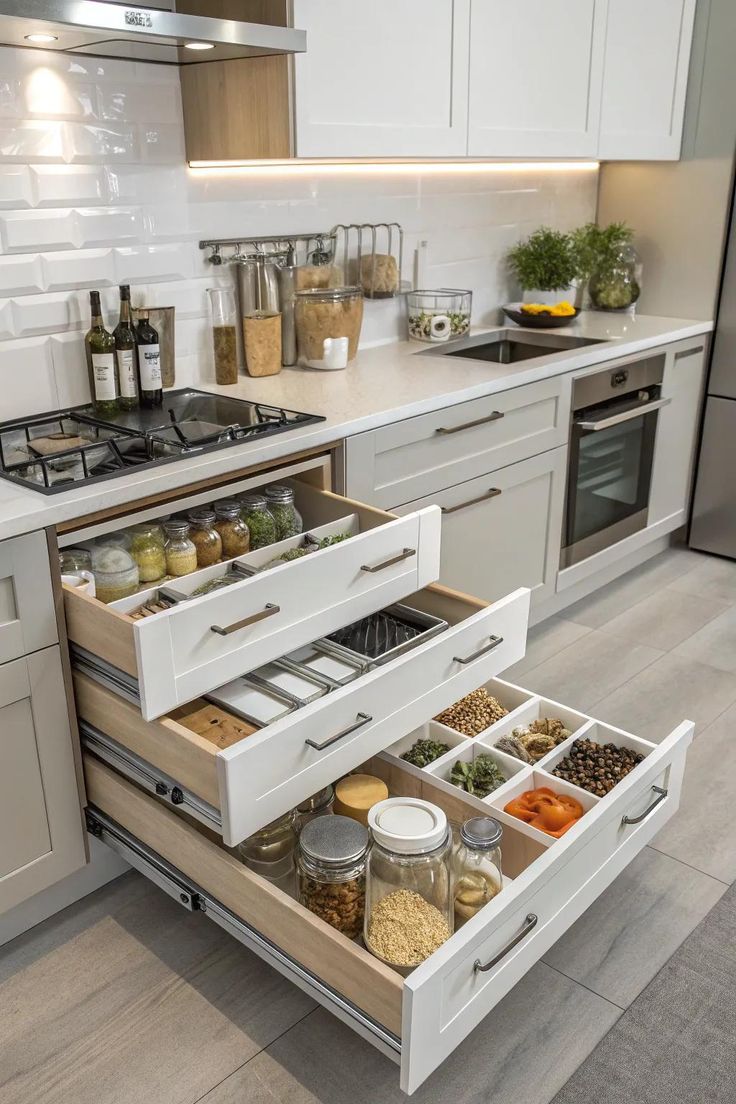
A beautiful kitchen is only as good as its organization. You can have the most expensive marble countertops and professional-grade appliances, but if your spice jars are overflowing and your pots are stacked in a chaotic pile, the joy of cooking quickly fades.
In 2026, the trend in home design has shifted from “more space” to “smarter space.” Effective storage planning ensures that every utensil, ingredient, and gadget has a designated home, creating a seamless workflow. This kitchen storage planning guide will walk you through the essential strategies to optimize your kitchen’s efficiency.
Analyze Your Needs: The Inventory Phase
Before you buy a single organizer or install a new cabinet, you must know what you are storing. Storage planning is not a one-size-fits-all solution; it depends entirely on your lifestyle.
- The Daily Users: Items you use every single day (coffee maker, toaster, favorite skillet) need to be in the most accessible spots.
- The Weekly Essentials: Items like baking supplies or specialized tools should be stored nearby but don’t need prime real estate.
- The Seasonal Guests: Holiday platters, turkey roasters, and bulky canning equipment should be relegated to the highest or lowest shelves.
The Principle of “Point of Use” Storage
The most efficient kitchens are designed around “Point of Use.” This means storing items as close as possible to where they are actually used.
The Prep Zone
Store your knives, cutting boards, and mixing bowls near the primary countertop workspace. Using deep drawers instead of lower cabinets allows you to see all your bowls at once without kneeling on the floor.
The Cooking Zone
Pots, pans, and cooking oils should be within arm’s reach of the stove. A popular 2026 design trend is the “spice drawer” located directly next to the range, allowing you to see all labels from above rather than digging through a dark upper cabinet.
The Cleaning Zone
Cleaning supplies, trash bins, and dish towels should live near the sink. An under-sink pull-out organizer can maximize that awkward space around the plumbing.
Maximize Every Inch with Smart Cabinetry
Standard shelving often leaves a lot of “dead air” at the top of a cabinet. To truly plan your storage, look for features that reclaim that space.
- Deep Drawers vs. Cupboards: Whenever possible, choose drawers for your base cabinets. Drawers pull the contents out to you, whereas cupboards require you to dig for items in the back.
- Pull-Out Pantries: Even a 6-inch gap between a fridge and a wall can be turned into a slim, pull-out spice or canned-good pantry.
- The Magic Corner: Corner cabinets are notorious for lost space. Use a “Lazy Susan” or a “LeMans” pull-out system to bring corner items into the light.
Utilize Vertical and Hidden Spaces
When you run out of horizontal space, look up. Your walls and even the backs of doors are untapped storage goldmines.
- Ceiling-Height Cabinets: Avoid the “dust shelf” at the top of your cabinets. Extend cabinetry to the ceiling to store items you only use once a year.
- Magnetic Strips and Rails: Use a magnetic strip for knives or a hanging rail for frequently used utensils. This clears up drawer space and keeps tools handy.
- Toe-Kick Drawers: The 4-inch space under your bottom cabinets can be converted into shallow drawers for flat items like baking sheets, pizza stones, or placemats.
The Appliance Garage: Hiding the Clutter
One of the biggest enemies of a clean kitchen is “countertop creep.” This happens when small appliances like blenders, air fryers, and mixers take over your workspace.
An appliance garage—a cabinet at counter level with a lift-up or pocket door—allows you to keep these items plugged in and ready for use while hiding them behind a sleek panel when you are done. This is a must-have for anyone aiming for a minimalist or contemporary look.
Frequently Asked Questions
What is the most common mistake in kitchen storage planning? The biggest mistake is not planning for enough drawer space. Most people default to standard cabinets with doors, but drawers are significantly more efficient for almost everything, from heavy pots to plastic containers.
How do I organize a pantry with deep shelves? Use clear, stackable bins and “staircase” risers for cans. For very deep shelves, install pull-out wire baskets so you can access the items at the very back without removing everything in the front.
Should I use open shelving for storage? Open shelving is great for items you use constantly (like daily coffee mugs) because it provides quick access. However, it requires a lot of maintenance to keep looking tidy and can collect grease and dust if located too close to the stove.
How do I store pot lids effectively? Pot lids are the ultimate kitchen clutter. Use a dedicated lid rack on the inside of a cabinet door or a drawer divider that allows you to stand lids vertically next to their corresponding pots.
How much storage space do I actually need? A general rule of thumb is to allow for at least 30 feet of shelf/drawer frontage in a small kitchen and 50+ feet for a large family kitchen. Always aim for 10% more storage than you think you need to allow for future gadget purchases.