In many modern dwellings, the kitchen is often the most cluttered room despite being the most important. For those living in apartments, tiny houses, or older cottages, space is a premium commodity. However, a small footprint doesn’t have to mean a disorganized cooking experience.
Mastering kitchen storage optimization for small homes is about moving away from the idea of “more space” and toward the concept of “better space.” By utilizing vertical areas, hidden corners, and multi-functional furniture, you can turn a cramped galley into a high-performance culinary hub.
The Foundation of Small Kitchen Organization
Before adding new gadgets or shelves, the first step in optimization is a ruthless audit of your belongings. In a small home, every item must earn its place.
- The 80/20 Rule: Most people use 20% of their kitchen tools 80% of the time. Identify your “daily drivers” and keep them in the most accessible zones.
- Decluttering Duplicates: Do you really need three sets of measuring cups or five wooden spoons? Consolidating your tools is the fastest way to reclaim cabinet real estate.
- Seasonal Rotation: Items used only once a year, like holiday cookie cutters or large turkey roasters, should be stored in high-up cabinets or even outside the kitchen to free up prime “work zone” space.
Utilizing Vertical Real Estate
When you run out of floor and counter space, the only way to go is up. Vertical storage is the secret weapon for small-home dwellers.
Ceiling-Height Cabinetry
Standard cabinets often leave a gap between the top and the ceiling that simply collects dust. Replacing these with ceiling-height units provides massive amounts of storage for rarely used items. If you are a renter and cannot change the cabinets, use attractive bins on top of your existing cupboards to create a similar effect.
Wall-Mounted Rails and Magnetic Strips
Countertop clutter is the enemy of a small kitchen. Use magnetic knife strips and hanging rails for utensils, mugs, and even small pots. This keeps your tools within arm’s reach while leaving your counters clear for actual food preparation.
Over-the-Door Organizers
The back of a pantry or cabinet door is often overlooked. Installing a slim rack can hold spices, aluminum foil, or cleaning supplies, turning an unused surface into a functional storage area.
Innovative Internal Cabinet Solutions
The depth of a cabinet can sometimes be a disadvantage in a small kitchen, as items get lost in the “black hole” at the back. Optimization requires better access.
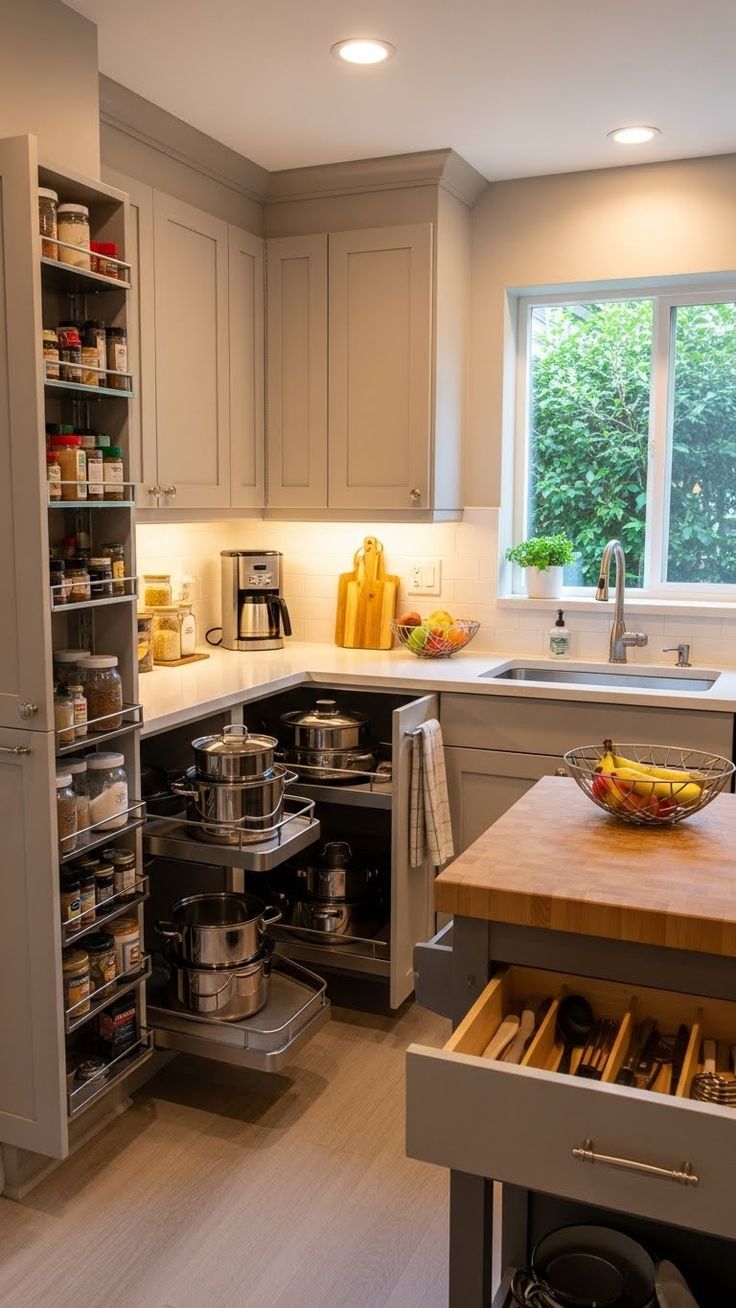
- Pull-Out Drawers and Baskets: Retrofitting your base cabinets with pull-out wire baskets allows you to bring the back of the cabinet to you. This is especially helpful for heavy pots and pans.
- Lazy Susans for Corners: Blind corner cabinets are notorious for wasted space. A rotating Lazy Susan or a “half-moon” pull-out ensures that even the deepest corners are fully utilized.
- Shelf Risers: Most cabinets have too much “dead air” between shelves. Using wire shelf risers effectively doubles your storage capacity for plates, bowls, and canned goods.
Multi-Functional Furniture and Mobile Solutions
In small homes, furniture should do more than one job. Flexibility is key to maintaining a flow in a tight layout.
The Rolling Kitchen Cart
If your kitchen lacks a permanent island, a slim rolling cart can act as a mobile prep station. Many models feature drawers for cutlery, a towel rack, and even a built-in cutting board. When you’re finished cooking, simply roll it against a wall or into a closet.
Over-the-Sink Workstations
Maximize your “airspace” by using an over-the-sink drying rack. Many modern designs also include slots for knives, soap, and sponges, effectively moving the entire cleaning station off the countertop and over the sink basin.
Toe-Kick Drawers
The 4-inch space between the bottom of your cabinets and the floor is usually empty. Converting this into “toe-kick drawers” provides a perfect hidden spot for flat items like baking sheets, muffin tins, or even a step stool.
The Visual Impact of an Organized Space
Optimization isn’t just about fitting things in; it’s about making the room feel larger and less stressful.
- Uniform Containers: Using clear, square containers for dry goods (flour, pasta, cereal) eliminates mismatched packaging and allows you to see exactly when you need to restock. Square containers also fit more efficiently into corners than round ones.
- Cohesive Color Palettes: Using a consistent color for your organizers and bins creates a visual “calm” that makes a small kitchen feel less busy and crowded.
Frequently Asked Questions
What is the best way to store spices in a small kitchen? Avoid bulky spice racks on the counter. Instead, use a tiered drawer organizer or a magnetic spice rack attached to the side of the refrigerator. This keeps them accessible without taking up prep space.
How do I store large pots and pans in a tiny apartment? Consider a ceiling-mounted pot rack if your ceiling height allows. If not, use vertical dividers inside a deep lower drawer to “file” your pans and lids sideways rather than stacking them.
Is open shelving a good idea for small kitchens? Open shelving can make a small kitchen feel airier and more open, but it requires constant tidying. If you tend to have mismatched dishes, closed cabinetry is usually better to hide visual clutter.
How can I create a pantry if I don’t have one? Use a slim “slide-out” pantry that fits in the 6-inch gap between your refrigerator and the wall. Alternatively, repurpose a nearby bookshelf or closet into a dedicated dry-goods station.
What is the most common mistake in small kitchen storage? The biggest mistake is leaving “dead zones,” such as the space under the sink, the very tops of cabinets, or the corners of counters. By using specialized organizers for these odd shapes, you can increase your storage capacity by up to 30%.