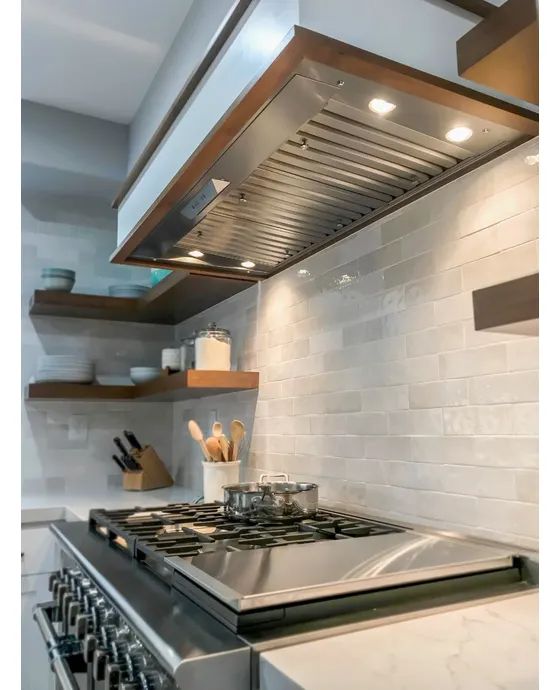
When planning a kitchen remodel, most people spend hours obsessing over countertop stone or cabinet colors. However, one of the most critical components for your home’s health and comfort is the ventilation system. A high-quality range hood does more than just remove odors; it clears out steam, smoke, airborne grease, and toxic combustion products.
Without proper ventilation, your brand-new cabinets will eventually be coated in a sticky film of grease, and your indoor air quality will suffer. This kitchen ventilation hood guide will help you understand the technicalities and styles so you can choose the perfect system for your culinary space.
Why Ventilation Matters More Than You Think
Cooking produces a surprising amount of pollutants. If you use a gas stove, you are releasing carbon monoxide and nitrogen dioxide into your living space. Even on electric or induction hobs, frying oils release particulate matter that can settle on furniture and lungs.
A well-installed hood acts as a vacuum for your kitchen, pulling these contaminants through a filter and ideally exhausting them outside. It also protects your home’s structure by removing excess moisture that can lead to mold and cabinet warping.
Understanding the Two Main Types of Systems
Before choosing a style, you must decide how the air will be processed. This is the most important technical decision in this kitchen ventilation hood guide.
Ducted (Vented) Systems
Ducted hoods are the gold standard. They pull air through a filter and then vent it through a duct to the outside of your home.
- Pros: Most effective at removing heat, moisture, and odors.
- Cons: Requires a hole in the wall or roof and professional ductwork installation.
Ductless (Recirculating) Systems
These hoods pull air through a charcoal filter to neutralize odors and then blow the air back into the kitchen.
- Pros: Easy to install anywhere; no ductwork required. Perfect for apartments.
- Cons: They do not remove heat or moisture and are less effective at clearing heavy smoke.
Popular Range Hood Styles for Every Design
Once you know the “how,” you can focus on the “look.” Your range hood can be a hidden workhorse or a stunning focal point.
- Wall-Mounted Hoods: These look like chimneys and are installed against an open wall. They are ideal for kitchens where the stove is not located under cabinets.
- Under-Cabinet Hoods: The most common and budget-friendly option. They are installed directly underneath an upper cabinet, saving storage space while providing efficient venting.
- Island Hoods: Specifically designed for stoves located on a kitchen island. These are finished on all sides and vent through the ceiling.
- Insert/Hidden Hoods: For a minimalist look, these units are “tucked” inside custom cabinetry or a decorative wood box, making the ventilation completely invisible.
- Downdraft Hoods: These are built into the countertop or the back of the stove. They rise up when in use and pull air downward into floor ducts. They are sleek but generally less effective than overhead hoods.
Technical Specs: CFM and Sones
To ensure your hood actually works, you need to look at two numbers: CFM and Sones.
CFM (Cubic Feet per Minute)
This measures the volume of air the hood can move.
- The Rule of Thumb: For electric stoves, you need about 100 CFM for every 10 inches of stove width. For gas stoves, look for 100 CFM for every 10,000 BTUs of total burner output. High-output professional ranges often require 600 to 1,200 CFM.
Sones (Noise Level)
One sone is roughly equivalent to the sound of a quiet refrigerator. A hood running at 5 to 8 sones can be quite loud—like a loud conversation. Look for models that offer high CFM with lower sones if you enjoy entertaining while you cook.
Maintenance for Longevity
A ventilation hood is only as good as its filters. Most hoods use one of three types:
- Mesh Filters: Aluminum layers that trap grease. These are usually dishwasher-safe.
- Baffle Filters: High-end stainless steel filters that force air to change direction quickly, causing grease to drop into a tray. These are the most durable.
- Charcoal Filters: Used in ductless models to trap odors. These cannot be cleaned and must be replaced every 3 to 6 months.
Frequently Asked Questions
How high should my range hood be mounted? Most manufacturers recommend mounting the hood between 24 and 30 inches above the cooktop. If it is too high, it won’t catch the smoke; if it is too low, it can be a fire hazard and get in your way.
Does an induction cooktop need a range hood? Yes. While induction doesn’t release gas fumes, the food you cook still produces steam, grease, and odors. A hood is still necessary to protect your kitchen surfaces and air quality.
What is “Make-Up Air” and do I need it? If you install a very powerful hood (usually over 400 CFM), it can pull so much air out of your house that it creates a vacuum effect. Make-up air systems bring fresh air back into the home to balance the pressure. Check your local building codes for requirements.
Can I vent my range hood into the attic? Never. Venting grease and moisture into an attic or crawlspace is a major fire hazard and will lead to wood rot and mold issues. Always vent to the direct exterior of the home.
How do I know if my hood is powerful enough? A simple test is the “paper test.” While the fan is on high, place a single sheet of paper against the filter. If the suction is strong enough to hold the paper in place, your airflow is generally sufficient for standard cooking.