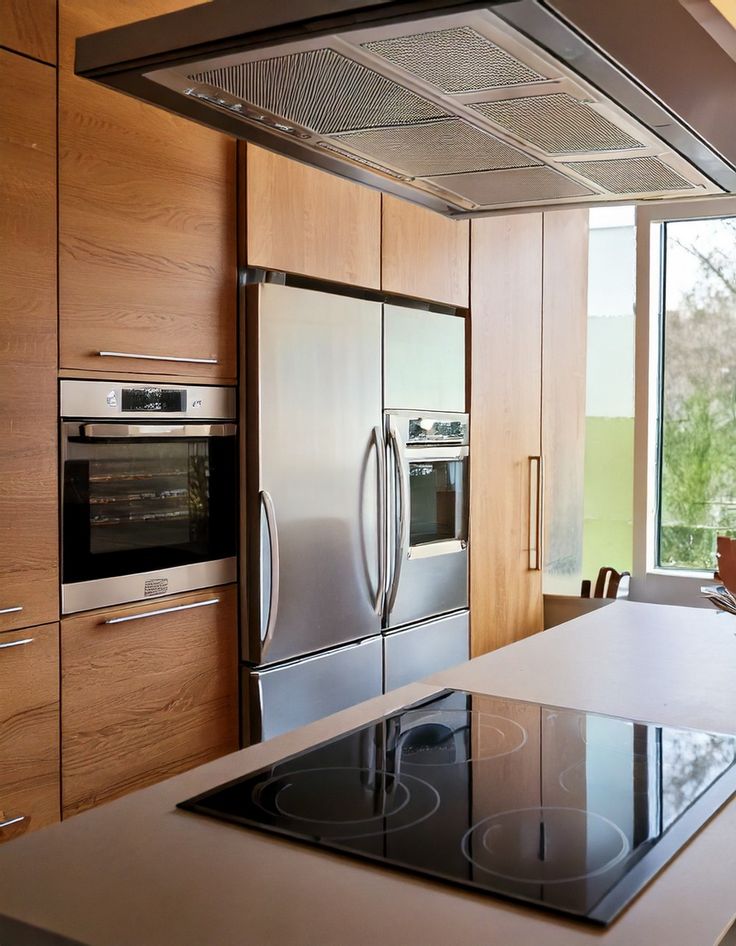
When we think about a dream kitchen, we often focus on marble countertops, smart refrigerators, or custom cabinetry. However, the most important element for your comfort and health is often the one you can’t see: the air quality.
A high-quality kitchen ventilation system is the unsung hero of the home. It removes heat, grease, steam, and unpleasant odors, while also protecting your family from harmful combustion byproducts like carbon monoxide and nitrogen dioxide. This kitchen ventilation system guide will help you understand your options and choose the best setup for your cooking style.
Why Quality Ventilation is Non-Negotiable
Cooking especially frying, searing, or using gas burners releases a cocktail of pollutants into your living space. Without a proper ventilation system, these particles settle on your furniture, stick to your cabinets as a greasy film, and can even trigger respiratory issues.
Proper ventilation does three key things:
- Protects Your Home: It prevents moisture from damaging your wooden cabinets and paint.
- Enhances Comfort: It removes excess heat, keeping your kitchen cool even during a summer bake-off.
- Improves Health: It filters out fine particulate matter ($PM_{2.5}$) and gases that accumulate during the cooking process.
Understanding the Two Main Types of Ventilation
Before buying a range hood, you need to know how your house is plumbed for air. There are two primary systems used in residential kitchens:
Ducted (Vented) Systems
This is the gold standard for performance. A ducted system pulls air from the kitchen and exhausts it completely outside the house through a metal duct. It is the most effective way to remove heat and moisture.
Ductless (Recirculating) Systems
If you live in a condo or an apartment where you cannot cut a hole in the exterior wall, a ductless system is your go-to. It pulls air through a charcoal filter to trap grease and odors before blowing the “cleaned” air back into the kitchen. While convenient, these do not remove heat or humidity.
Choosing the Right Range Hood Style
The “look” of your ventilation system should match your kitchen’s aesthetic and layout. Here are the most popular designs:
- Wall-Mounted Hoods: Resembling a chimney, these are mounted against a wall and serve as a bold focal point.
- Island Hoods: Designed to hang from the ceiling over a kitchen island. These must be more powerful because they don’t have walls to help funnel the air upward.
- Under-Cabinet Hoods: A space-saving classic that sits directly beneath your upper cabinetry.
- Downdraft Ventilation: Hidden behind the cooktop, these pop up when needed and pull air downward into a floor duct. These are sleek but generally less effective than overhead hoods because they fight the natural tendency of heat to rise.
- Insert/Built-in Hoods: These are hidden inside custom cabinetry or a decorative wood “surround,” perfect for a seamless, minimalist look.
Key Technical Specs: CFM and Sones
To ensure your ventilation system actually works, you need to look at two specific ratings:
CFM (Cubic Feet per Minute)
This measures the volume of air the fan can move. As a general rule, you need 100 CFM for every 10 inches of stove width. If you have a high-output gas range, you may need much more approximately 1 CFM per 100 BTU of total burner output.
Sones (Noise Level)
A “sone” is a unit of loudness. 1 sone is roughly the sound of a quiet refrigerator, while 8 sones is the sound of heavy traffic. Look for a hood that offers a high CFM at a low sone rating (typically 3 to 5 sones) so you can still hold a conversation while cooking.
Maintenance for Peak Performance
A ventilation system is only as good as its filters.
- Mesh/Baffle Filters: Usually made of stainless steel or aluminum, these trap grease. They should be cleaned in hot, soapy water or the dishwasher every 1-2 months.
- Charcoal Filters: Found in ductless systems, these cannot be cleaned and must be replaced every 3-6 months to remain effective.
Frequently Asked Questions
How high should my range hood be from the stove?
For most electric stoves, the hood should be 24 to 30 inches above the cooking surface. For gas ranges, it should be 30 to 36 inches to safely handle the higher heat and flames.
Do I really need a range hood if I have a window in my kitchen?
Yes. While a window provides fresh air, it does not create the targeted “suction” needed to capture grease and smoke before they spread throughout the room.
What is “Make-up Air” and do I need it?
If you install a very powerful hood (usually over 400 CFM), it can create a vacuum in a tightly sealed modern home. A “make-up air” system brings in fresh outdoor air to balance the pressure. Check your local building codes, as this is often a legal requirement for high-CFM fans.
Is a microwave-hood combo (OTR) sufficient?
Over-the-range (OTR) microwaves with built-in fans are great space-savers for small kitchens, but they are generally less powerful and louder than dedicated range hoods. They are best suited for light cooking.
How do I know if my ventilation is working correctly?
A simple test is the “paper towel test.” Turn the fan on high and hold a single sheet of paper towel against the filter. If the suction is strong enough to hold the paper in place, your airflow is likely sufficient.